How close is your ZPA to Zero Trust? Measuring it, and why it now caps the score
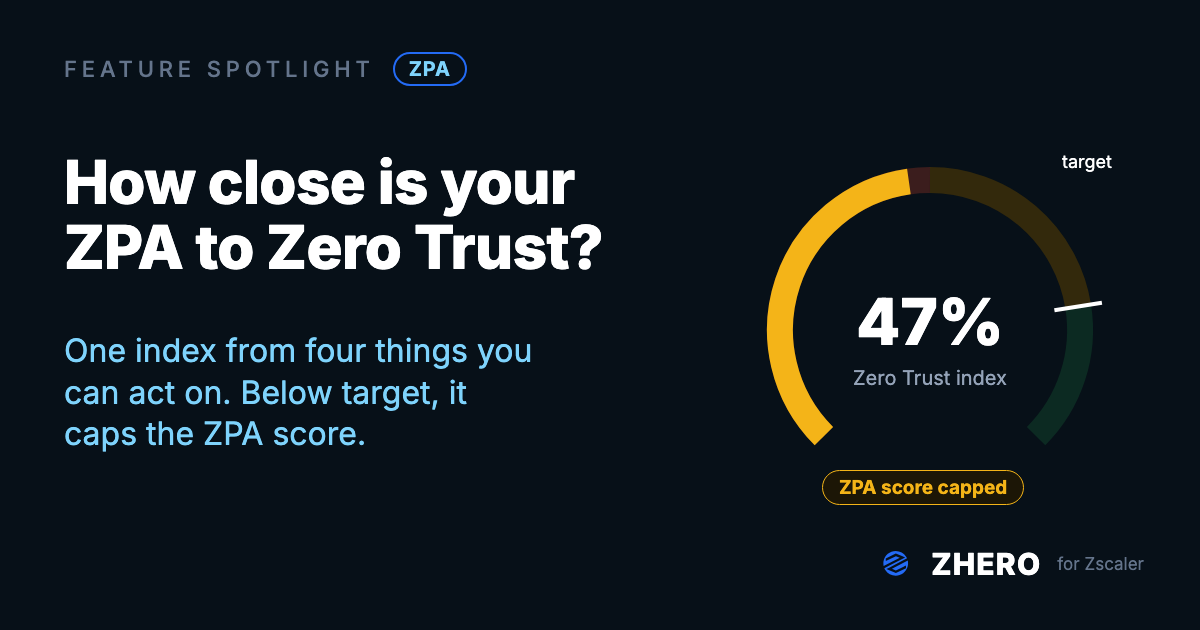
ZHERO Zero Trust Coverage turns a ZPA configuration into one Zero Trust index from four things you can act on. Below the target, it caps the ZPA score.
A ZPA rollout has a clear finish line: users are off the VPN, the applications are published, the tickets have stopped. Whether the result is Zero Trust is a different question, and the console does not answer it. It shows segments, rules and connectors one by one. It does not tell you how much of your access is still granted to anyone who can reach a segment.
ZHERO Zero Trust Coverage answers it with one number, and from this release that number counts in the ZPA score.
What it measures#
Zero Trust Coverage, in the ZPA tab of the Dashboards drawer, reads your ZPA configuration and turns it into a Zero Trust index. The index is built from four things you can act on:
- Identity. Access rules for people that carry an identity condition. A rule with no identity grants the segment to anyone who reaches it.
- Device posture. Rules that check the device before it connects, first that it is a known device, then that it is protected.
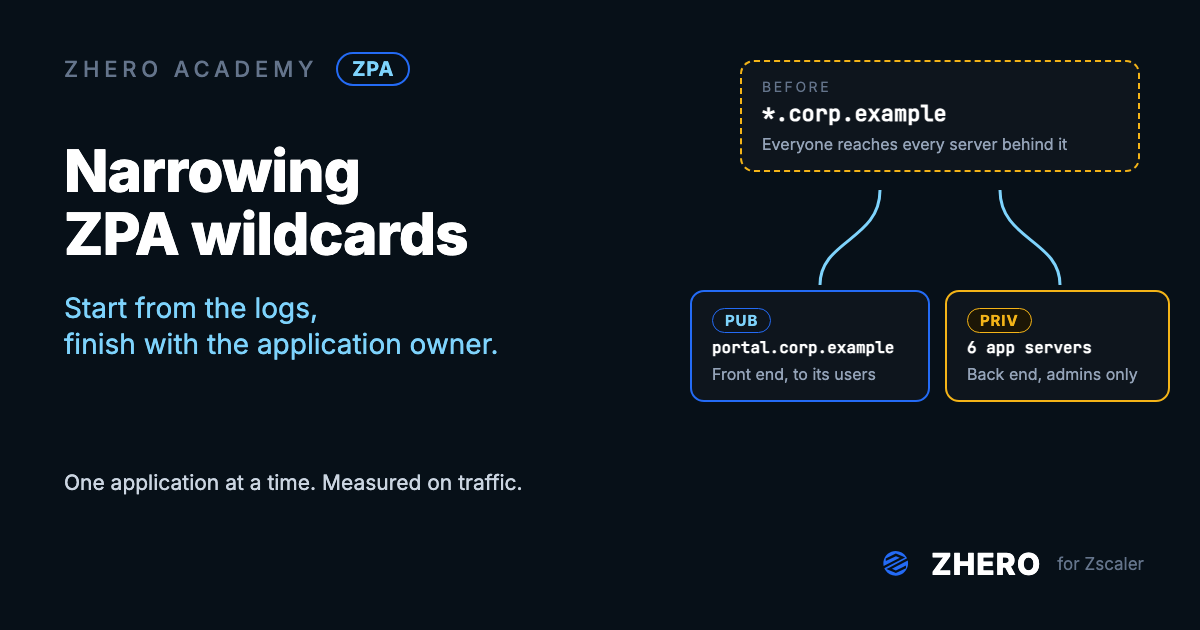
- Segmentation. Segments scoped to what they need, weighed by how broad they are: a deep
wildcard does not cost as much as a bare
*. We wrote about why broad segments are hard to see in the wildcard black box. - Granularity. Access rules written on groups rather than on single users, so access follows roles instead of names.
Each KPI sits on a banded gauge with its verdict and what to do next. Traffic is measured on the dashboard too, but it never enters the index: it is noisy and depends on a live console call, while the index has to mean the same thing every day.
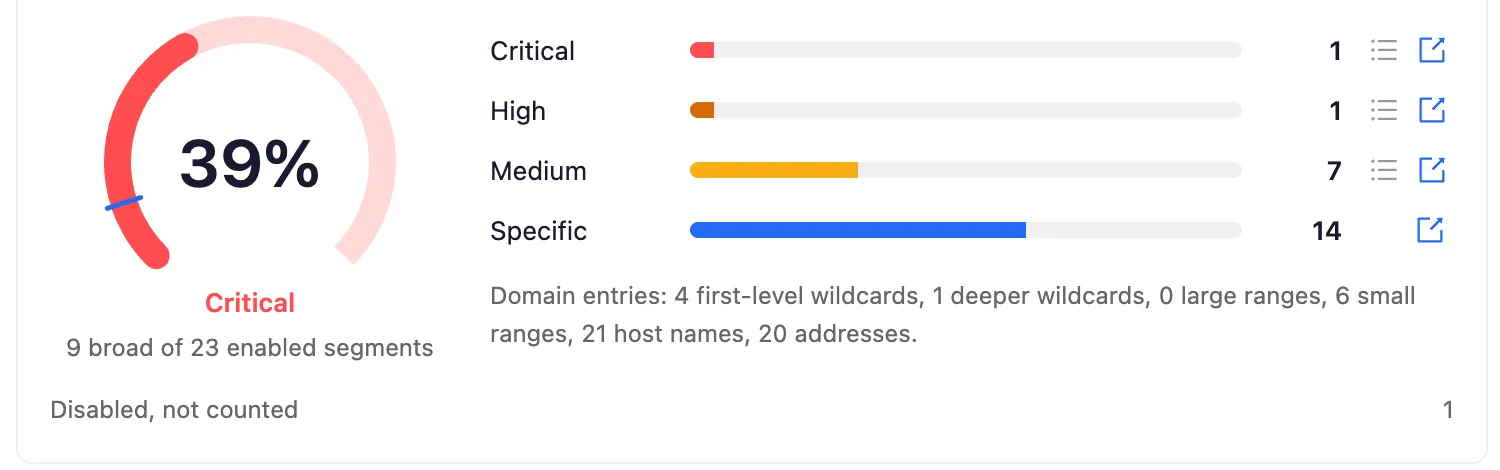
The bands are ours. Zscaler does not publish a Zero Trust benchmark for ZPA, so the dashboard says what each KPI measures and how the verdict is reached, and you can disagree with a threshold knowing exactly what it is.
Why it now caps the ZPA score#
The ZPA score has always measured configuration quality: hygiene, unused objects, risky settings. A tenant can score well on all of that and still leave half its access open to anyone on the network. That is the gap the ceiling closes.
Below the target, the Zero Trust index puts a ceiling on the ZPA score, the same way a low SSL inspection rate holds back the ZIA score. The curve is deliberately strict in the middle: Zero Trust is decided by the weakest path in, so reaching half the target closes far less than half the exposure, and it does not earn half the points. Close to the target the ceiling fades, and at the target it lifts entirely. The ZPA gauge and the activity panel show the ceiling, and the gains projected in Improve stop at it, so a score that stops moving explains itself. How the rest of the score works is in the posture score explained.
The full analysis#
The index reads the configuration. Run goes further and reads how the tenant is used:
- broad and unused segments, with the hosts behind the broad ones;
- rule usage and least privilege, so you see access that is granted and never used;
- connector health and day by day trends;
- a PDF that explains how to read every section, for the people who were not in the room.
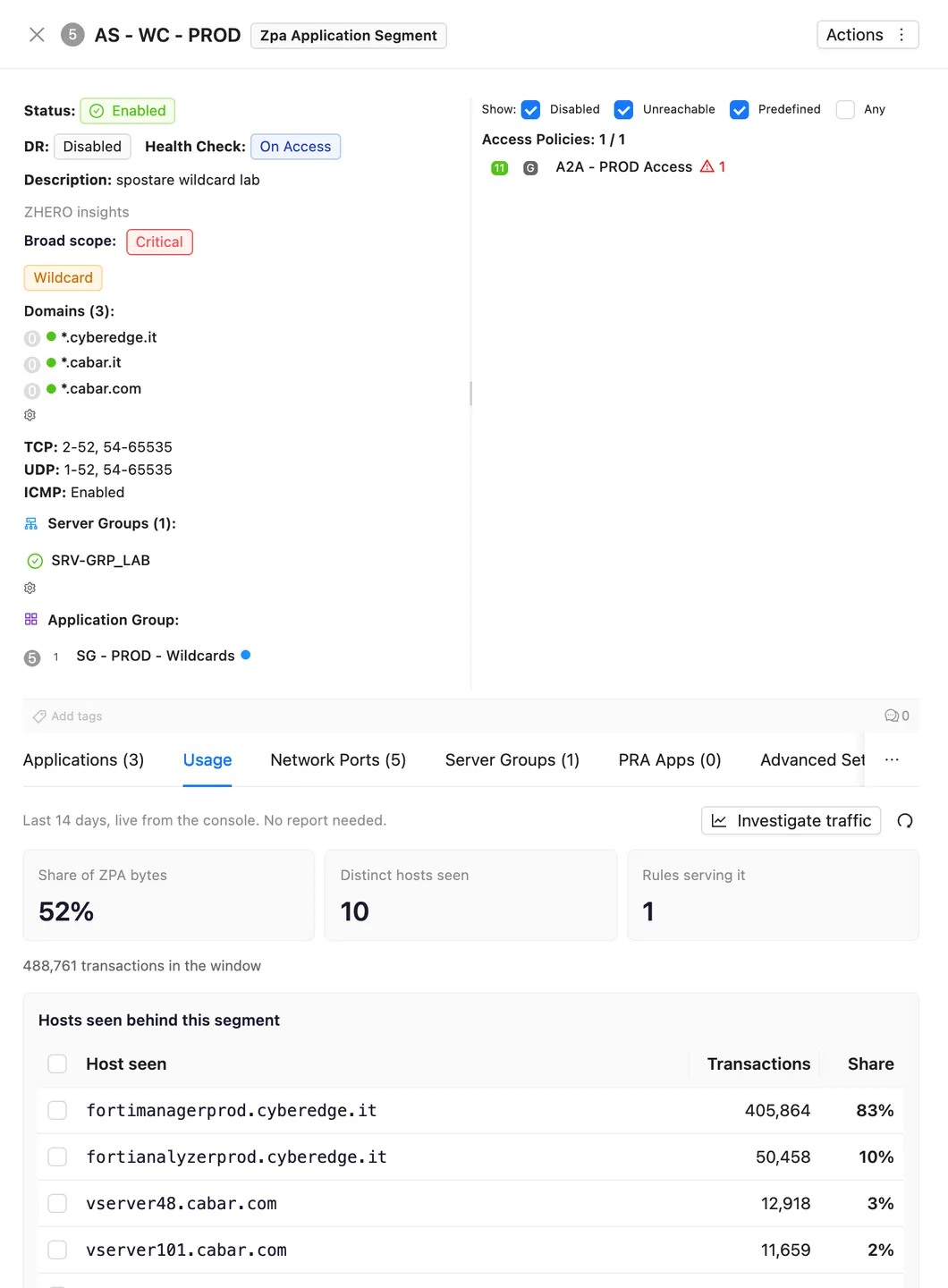
The Usage tab in segment and access rule drawers brings the same view to a single object: who uses it and how, to spot least privilege gaps one segment at a time.
What it does not claim#
Zero Trust Coverage measures the configuration ZHERO can read. It does not see what happens outside ZPA, and it does not certify a tenant as Zero Trust. What it gives you is a number that moves when the configuration moves, the four places it comes from, and the next step for each.
Zero Trust Coverage is part of ZHERO for ZPA. In the free trial you see the index and its KPIs; the full analysis, the trend, the PDF and the Usage tab come with the licence.
Bring your tenant to a demo and we will read your Zero Trust index together, KPI by KPI, on your configuration.
Frequently asked questions
What is Zero Trust Coverage in ZHERO?
A dashboard in the ZPA tab of the ZHERO Dashboards drawer. It reads the ZPA configuration and turns it into a Zero Trust index and its KPIs, each on a banded gauge with its verdict and what to do next.
What goes into the Zero Trust index?
Four things from the configuration: whether access rules for people carry an identity condition, whether devices are checked before they connect, how broad the application segments are, and whether rules are written on groups rather than single users. Traffic does not enter the index.
Why does a low Zero Trust index cap the ZPA score?
Because a ZPA configuration can pass many hygiene checks and still grant access to anyone who reaches a segment. Below the target, the index puts a ceiling on the ZPA score, the same way a low SSL inspection rate holds back the ZIA score. The ZPA gauge in the posture overview and the activity panel show the ceiling, and the projected gains in Improve stop at it.
Are the gauge bands a Zscaler benchmark?
No. Zscaler does not publish a Zero Trust benchmark for ZPA. The bands are ZHERO's own judgement, and the dashboard says what each KPI measures.
What can I see in the free trial?
The Zero Trust index and its KPIs. The full analysis run, the trend, the PDF report and the Usage tab in segment and rule drawers come with the licence.