Blog · Tag
Security Posture
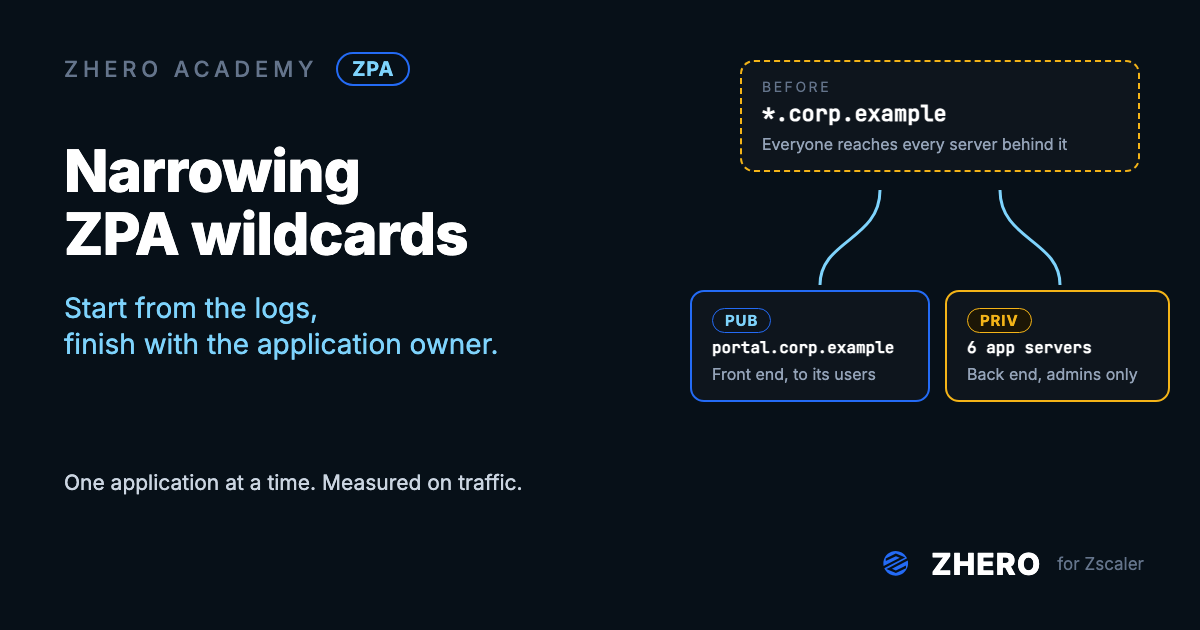
Narrowing ZPA wildcards: start from the logs, finish with the application owner
A broad ZPA segment does not get narrower by reading more logs. The logs tell you what flows through it; the people who own the applications tell you what should. Here is the method we use in the field: two fronts, one application at a time, public and private parts split, and progress measured on traffic, not on segment count.
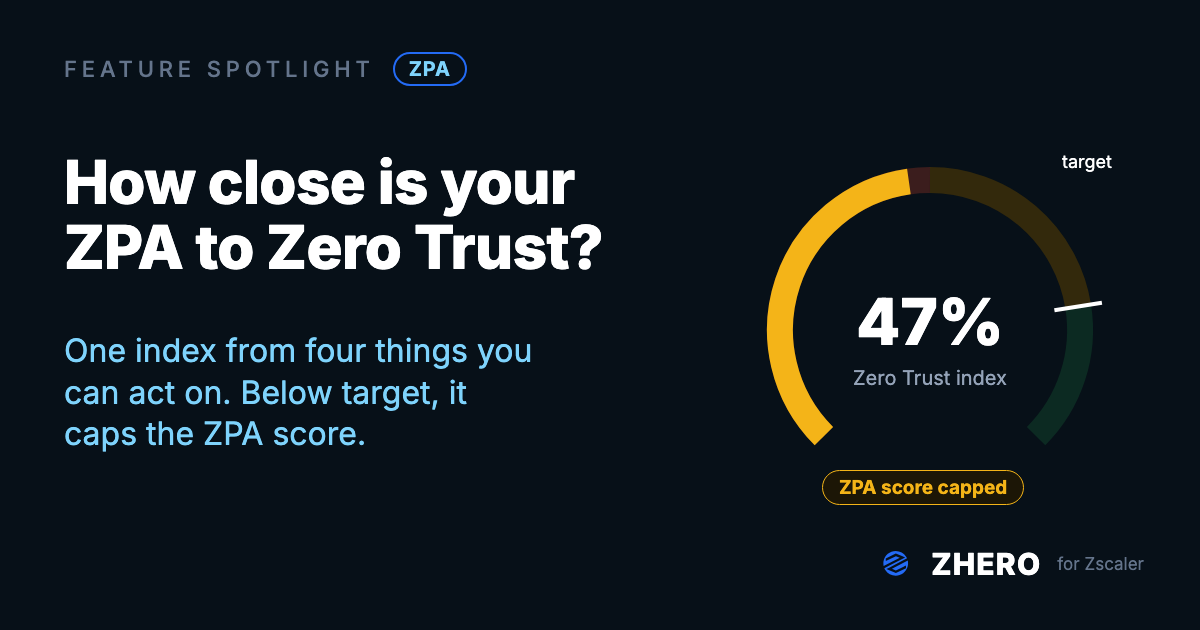
How close is your ZPA to Zero Trust? Measuring it, and why it now caps the score
A ZPA project can be finished and still be far from Zero Trust. Zero Trust Coverage reads your ZPA configuration and turns it into one index from four things you can act on, and a low index now puts a ceiling on the ZPA score. Here is what it measures, why it caps the score, and what it does not claim.
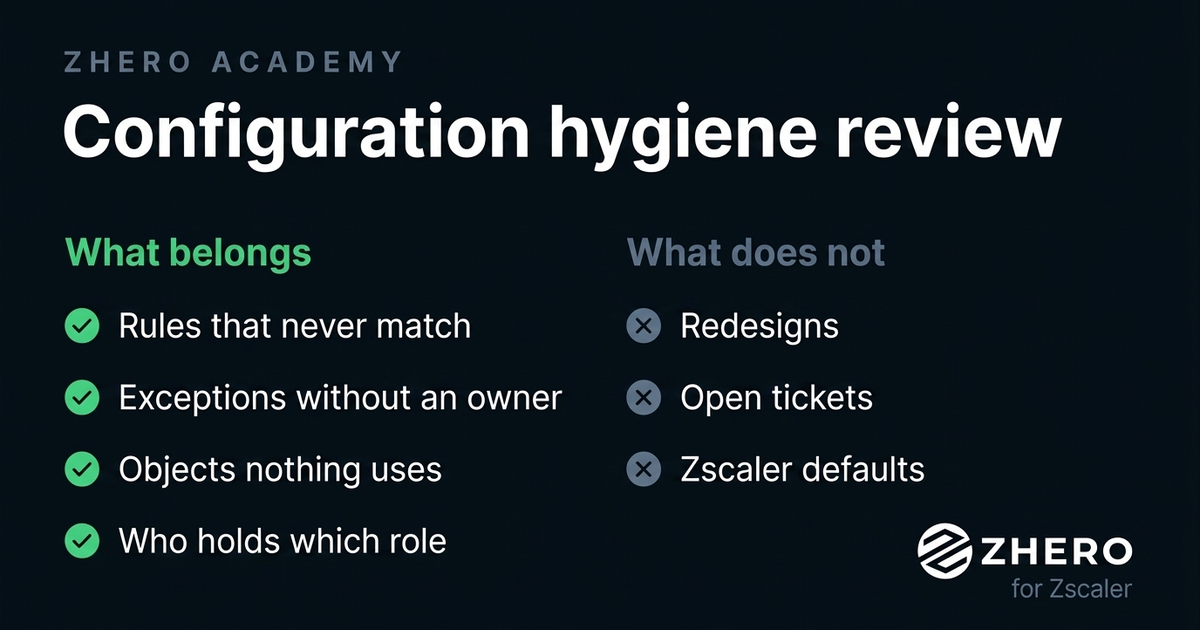
What belongs in a configuration hygiene review, and what does not
Configuration drift is the default state of a tenant that is actually being used. A hygiene review is how you measure it on purpose, once a quarter, the same way every time. Here is what goes in, what stays out, and how to run it by hand in the Zscaler console.
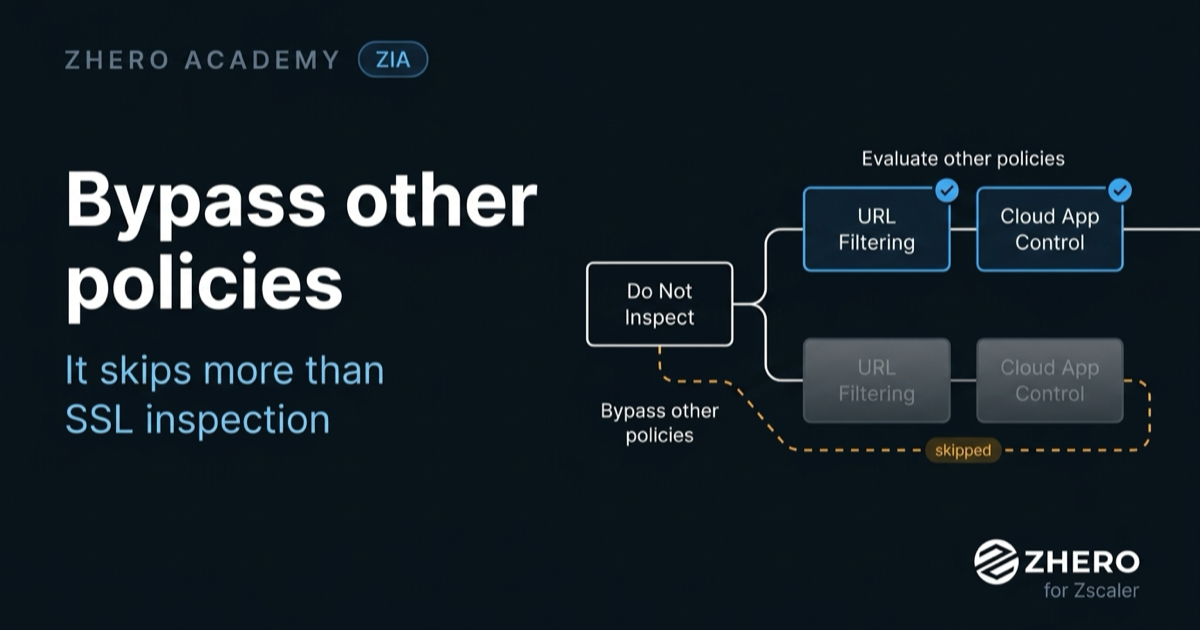
"Bypass other policies" does not only skip SSL inspection
Ask a room of Zscaler admins what a Do Not Inspect rule with Bypass Other Policies does, and most will say it stops SSL inspection. It does more than that. Here is what it skips, why it ends up on rules nobody meant to exempt, and how to check yours by hand.
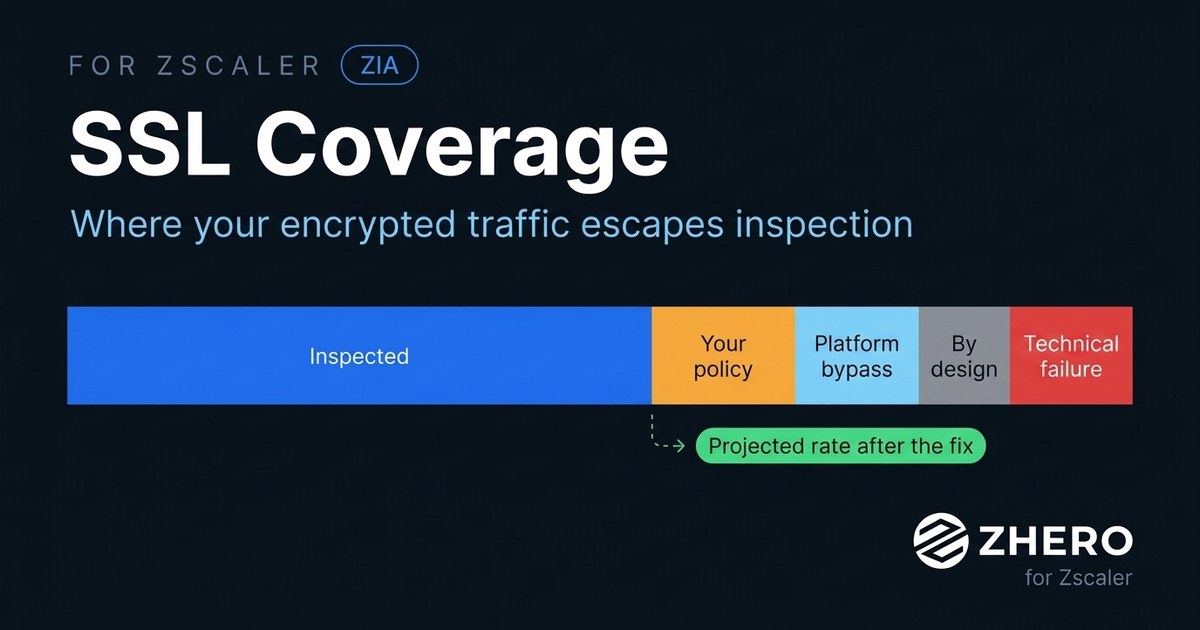
SSL Coverage: why your inspection rate is low, and where the rest of the traffic goes
An SSL inspection rate is a sum, not a diagnosis. SSL Coverage takes it apart inside your Zscaler console: why each part of the traffic escapes inspection, where it goes, which rule most likely lets it through, and how many points of rate each fix is worth.
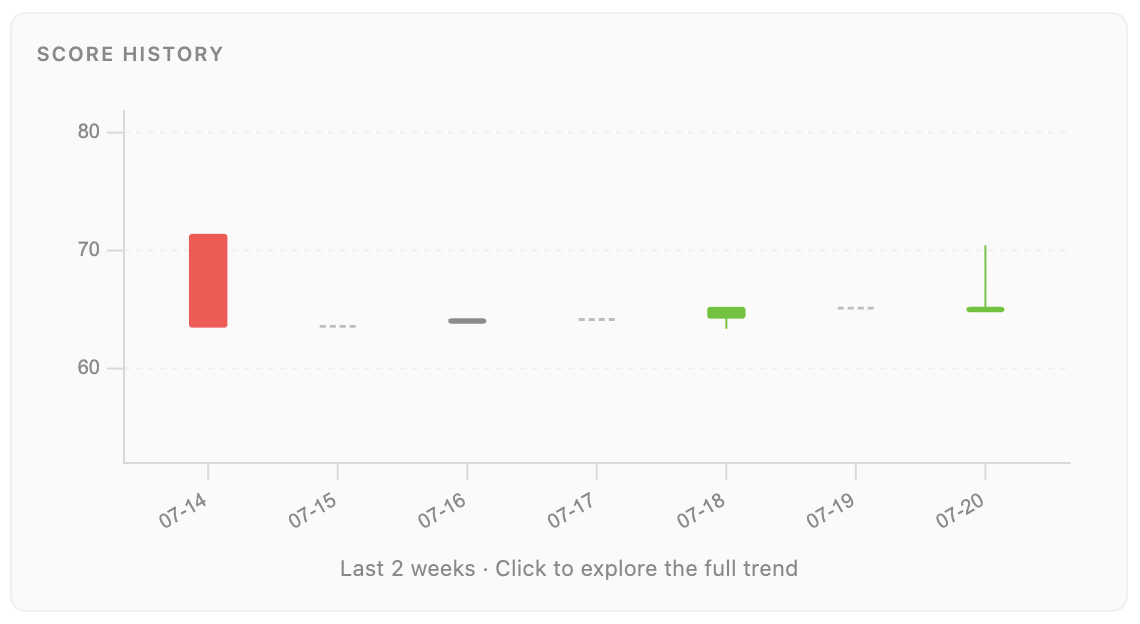
Your posture score dropped 3.33 points. Here is what moved it, and who.
Most configuration assessments tell you where you were on the day somebody ran them. Here is what changes when the score becomes a trend with attribution: you can see a regression, name its cause, and preview a fix before you apply it.
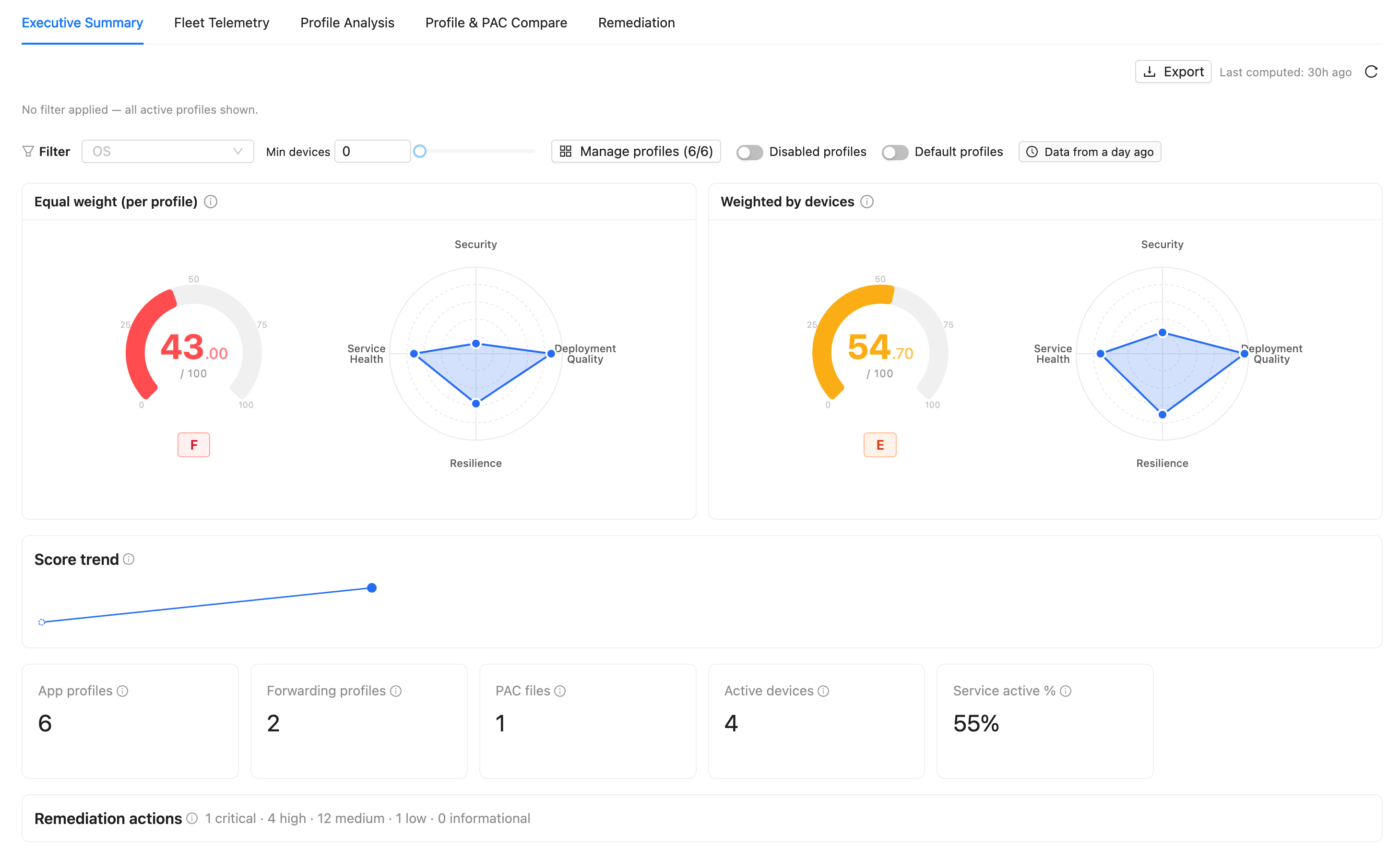
App profiles, forwarding profiles, PAC files: the assessment nobody wanted to do
The Client Connector layer is the part of a Zscaler assessment everybody postpones: three configurations that depend on each other, spread across screens you cannot open at the same time. Here is how ZHERO turns it into two scores, a heatmap and a recovery plan.
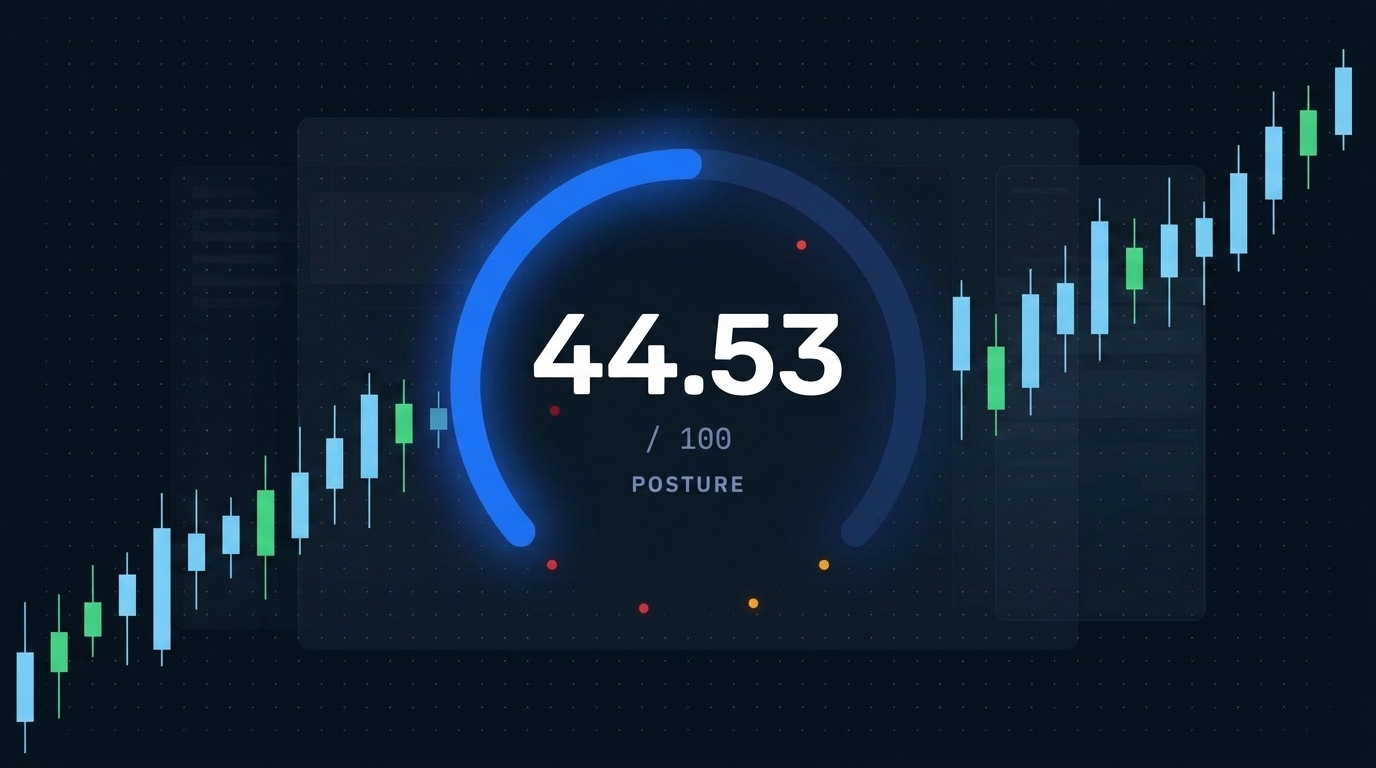
Your Zscaler tenant now has a score your board can read
A real production tenant scored 44.53/100, Grade F, with 495 active findings its team did not know about. Why posture blindness is normal, and what a readable score changes.