Blog · Tag
Investigation & Diagnostics
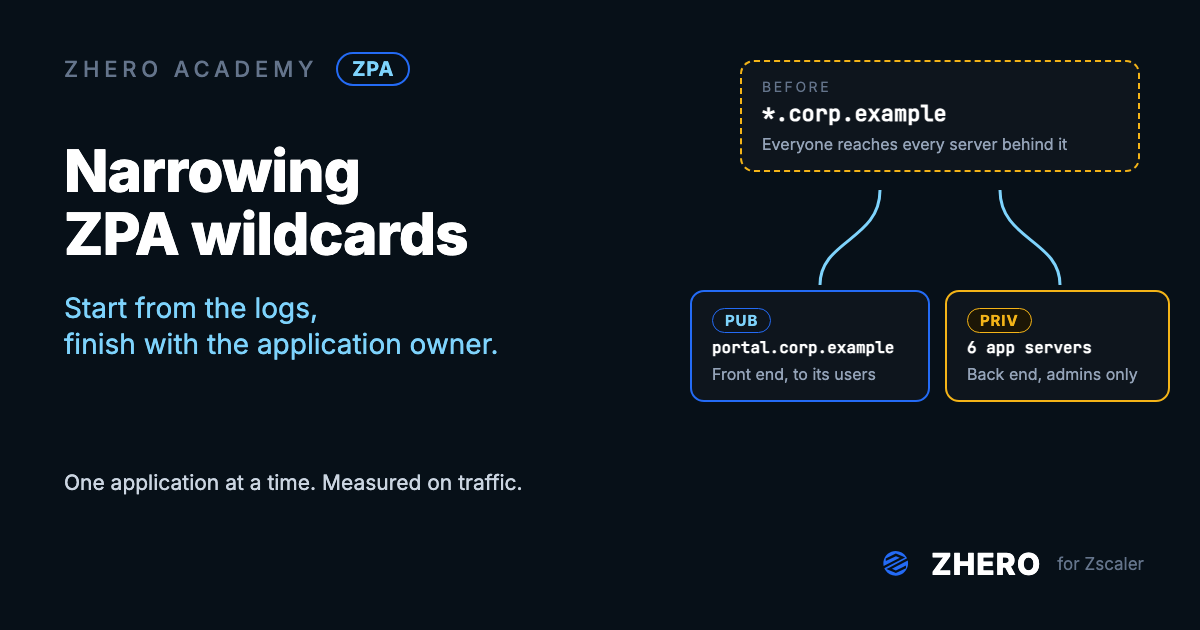
Narrowing ZPA wildcards: start from the logs, finish with the application owner
A broad ZPA segment does not get narrower by reading more logs. The logs tell you what flows through it; the people who own the applications tell you what should. Here is the method we use in the field: two fronts, one application at a time, public and private parts split, and progress measured on traffic, not on segment count.
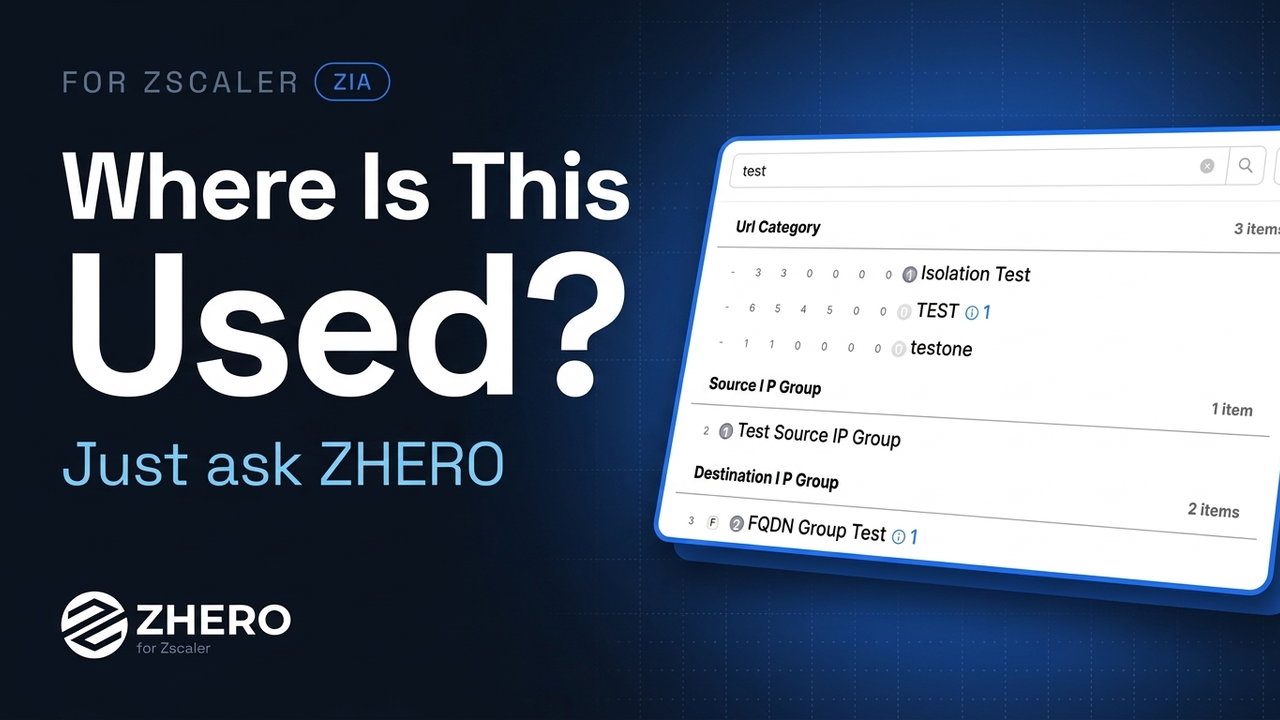
Where is this actually used? Ask ZHERO
In a tenant with four years of history, finding out where an object is used means opening one policy, then the next, then the other product. Universal search turns that into a lookup: results grouped by entity type, a usage counter on each one, and a drawer that keeps going one level at a time.
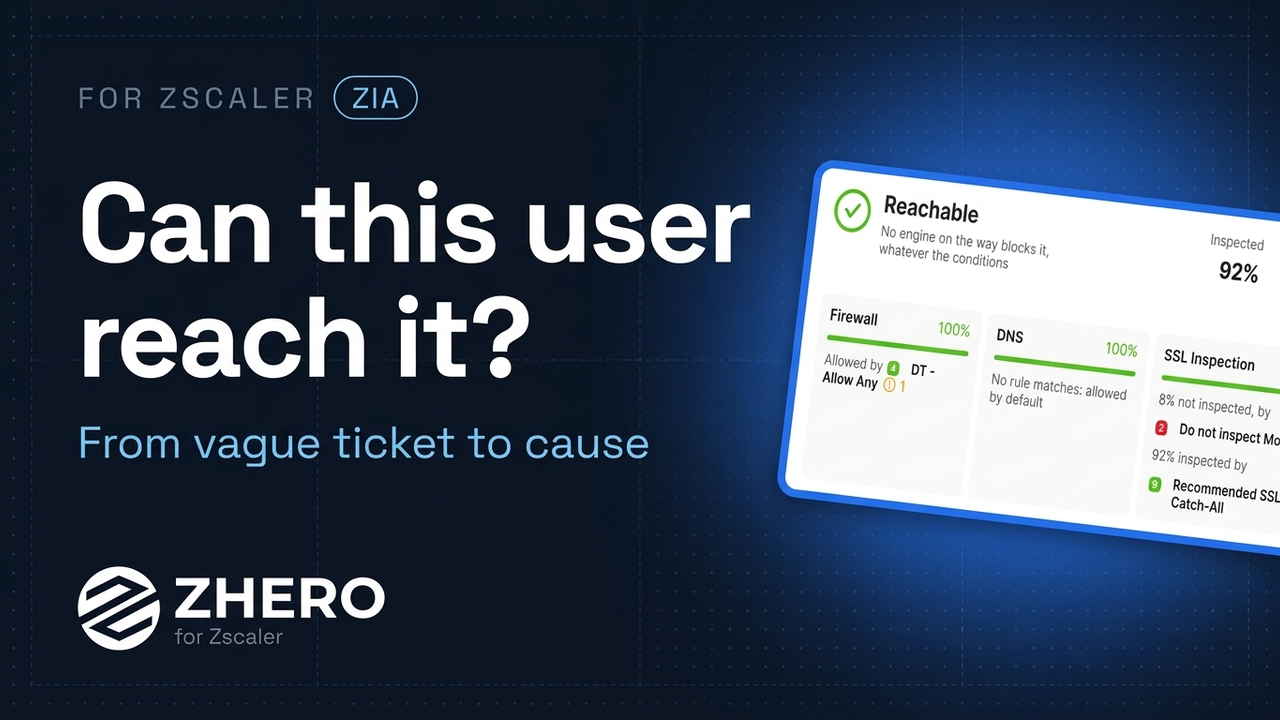
Can this user reach it? From a vague Zscaler ticket to the cause
"Claude stopped working for me on Wednesday." No time, no error, just a day. The configuration says the destination is reachable, the logs say there were blocks, and the answer sits in the gap between the two. This is how the Troubleshooting Engine closes that gap, step by step.
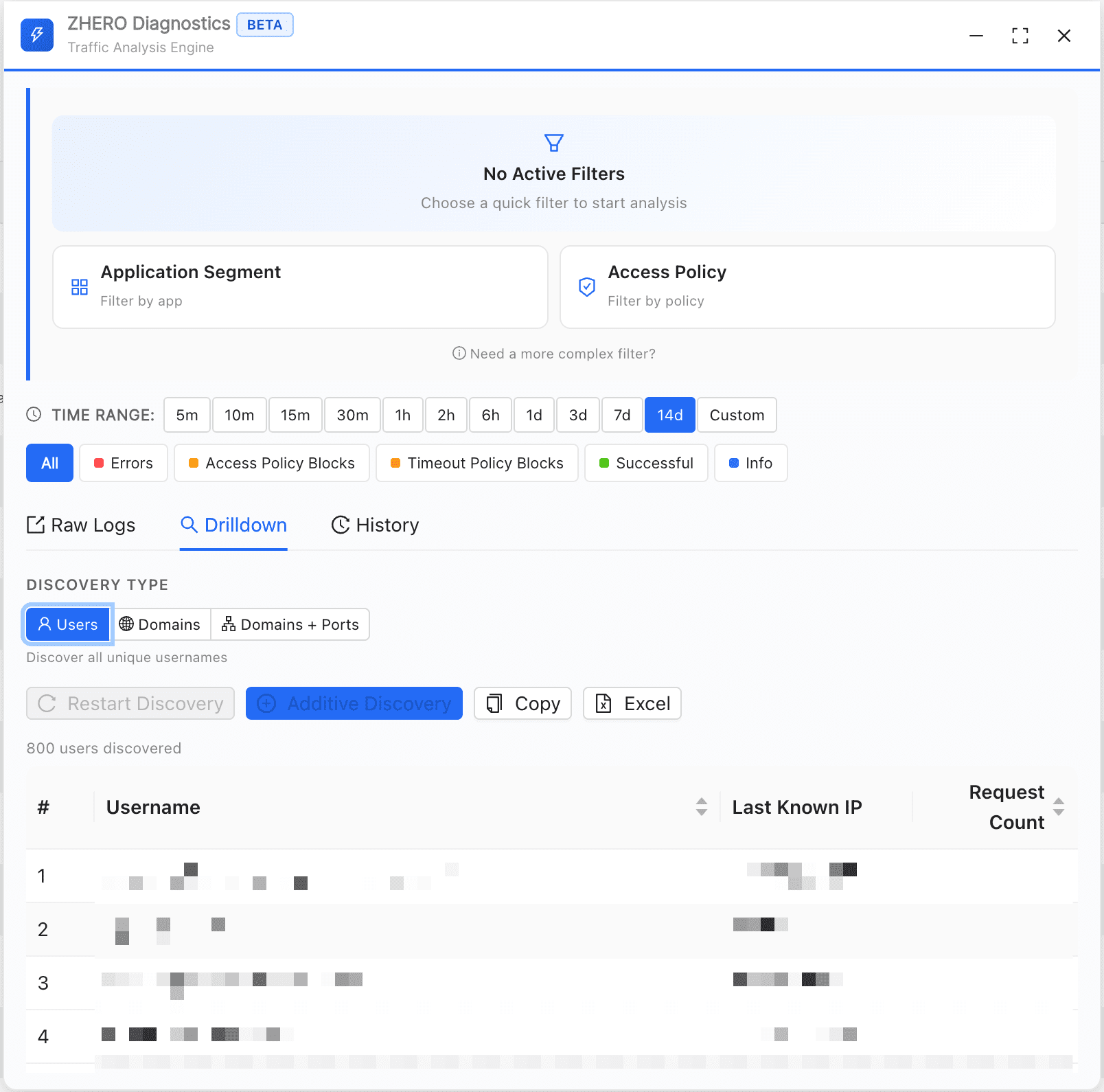
Your ZPA discovery wildcard is a black box. Here's how to open it.
Every ZPA environment starts with broad discovery wildcards. They are necessary, and they go opaque fast. Here is how to see exactly what is flowing through one, then tighten it.
The work you'll never do: the mental list every Zscaler admin carries
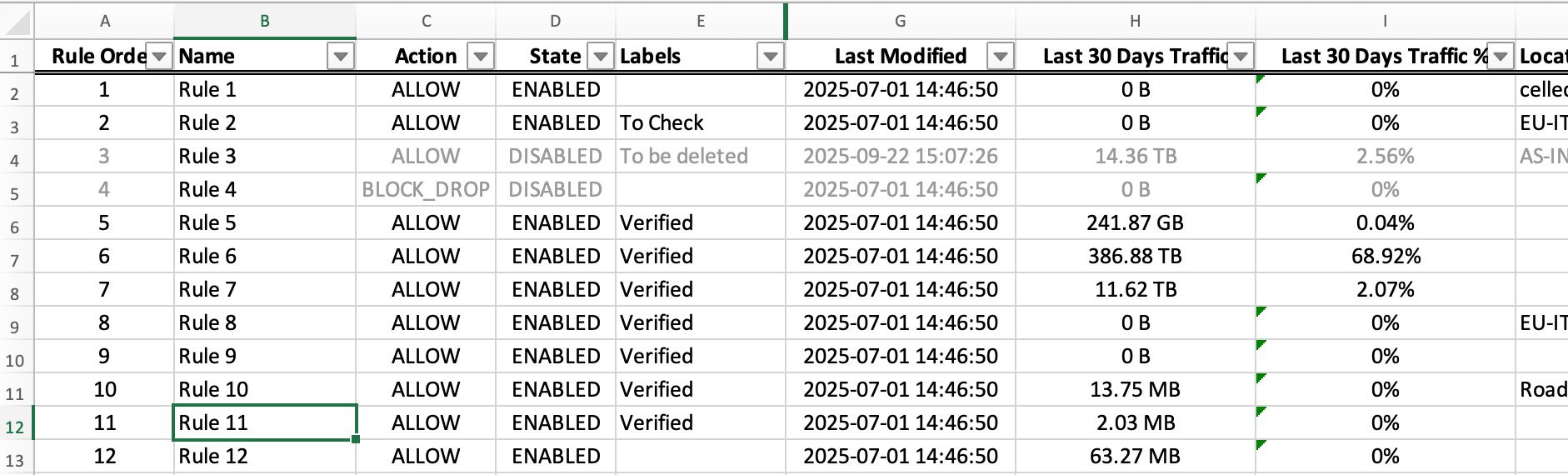
One tenant had 290 locations and nobody knew which were still live. An export with one extra column showed 180 were ghosts. The work that was too expensive becomes done.